
Clearwater · Pinellas County, FL
Hurricane Pruning in Clearwater, FL
Hurricane pruning is a spring job. Done before June 1, it pulls out the dead and weak wood most likely to fly, lightens the heavy ends of long limbs and leaves every palm crown whole. Done badly, or done once a storm has a name, it can leave a tree weaker than it found it.

- Typical range
- $350–$1,300 per tree
- Best window
- Late winter to spring
- Palms
- No hurricane cuts
- Included
- All debris hauled off
Hurricane Pruning in Clearwater Is About What Breaks First
No trim makes a tree storm-proof. What pruning can do is take away the parts most likely to fail and lower the load on the parts that stay. In practice that is a short list: dead limbs, broken stubs from earlier storms, limbs with cracks or decay, long horizontal branches carrying weight far from the trunk, and competing leaders pinched together with bark between them. UF/IFAS research links that last pattern to a large share of hurricane breakage, which is why a good pre-season visit is as much inspection as cutting.
It also helps to be clear about what pruning will not fix. Hurricane Helene in 2024 was mostly a salt-water event in Clearwater, with a record 6.67 feet of water above the high-tide line at the Clearwater Beach gauge. Milton, two weeks later, was the wind and rain storm, with a gust near 90 mph on the beach and heavy rain that soaked root zones. Pruning helps with Milton-type damage. It cannot help a tree whose roots sat in seawater, and the salt story is its own subject, covered in our salt water post.
Hurricane Tree Pruning Calendar for Clearwater
- January to May: the working window. Book the trim, let us walk the property, and get the cutting done while trees have time to grow new leaves before the season. The official season covers June 1 to November 30.
- June to November: keep it light. Dead or hanging limbs can come off any time. Heavy live-wood cutting in the middle of the season leaves fresh wounds and an open canopy going into the windiest months.
- A storm has a name: stop. Clearwater's storm guidance tells residents to put the pruning off once a storm is named, since curbside cuttings can be picked up by the wind and thrown. We hold to that too and spend that time on hazards already hanging over roofs.
- After the storm: hazards first, restoration later. Broken stubs and hangers come out right away. UF says rebuilding a damaged crown is a two-to-five-year process, so the rest waits for the tree to show what it kept.
Hurricane Pruning for Oaks and Shade Trees
On broadleaf trees the visit is a crown cleaning plus targeted thinning, done in this order:
- Deadwood and broken wood out. These pieces weigh little and do the most damage when they let go.
- End weight reduced. Long limbs reaching over the roof or pool cage get shortened back to a side branch, which cuts leverage without the stubs that topping leaves.
- Selective thinning. A few interior limbs come out so wind passes through rather than pushing on a solid sail. Interior foliage stays; stripping the inside bare puts all the weight at the tips, which defeats the point.
- Weak forks addressed. On younger trees we subordinate one of two competing leaders a little each visit rather than trying to fix it in one cut.
All of that lives inside the legal caps. Clearwater allows no more than 30% of a protected tree's foliage per year; Dunedin and Safety Harbor allow 25%. A crew that “storm-proofs” a big oak by taking half the canopy is breaking the code and weakening the tree in the same visit. The species matters too: laurel oaks and water oaks break far more readily than live oaks in UF's storm studies, and Norfolk Island pines are known to lose major limbs in windstorms, so those trees get the closest look. Oak specifics are on our oak tree trimming page.
Hurricane Cut Palm Trees: Why We Will Not Do It
Reducing a palm to a handful of vertical fronds, the so-called “hurricane cut,” is still a common request every May. UF/IFAS Extension in Pinellas calls it wrong and harmful. The evidence is blunt: when UF looked back at the 2004 and 2005 storms, crowns snapped off hurricane-cut palms more often than off palms that were left alone or only lightly cleaned up. Green fronds feed the bud and help shield it from wind; take them away and the palm has less food and less protection at the same moment.
Palms already handle wind well when they are left intact. In Hurricane Charley, UF found palms survived at 88% compared with 77% for other trees, and the native sabal is rated highest for hurricane wind resistance on the Pinellas Extension list. Coconuts that had been over-trimmed fared worse in storms. So a pre-season palm visit is just this: fully dead fronds, seed pods, fruit stalks and coconuts off; nothing above the 9 and 3 o'clock line, and usually much less. The full argument is in hurricane cuts on palm trees, and the day-to-day work is on our palm tree trimming page.
Hurricane Pruning Clearwater Lots by Exposure
Where the tree stands changes the priorities. On Clearwater Beach and Sand Key the trees are mostly palms and sea grapes taking salt spray head-on, so the work is palm cleanup and keeping sea grapes on your own lot off walkways. Beach and public sea grapes are protected by state law and stay untouched. On the bluff in Harbor Oaks, old oaks catch wind off the harbor over historic roofs, and the job is end-weight reduction with ropes. Inland in Countryside, Milton-style rain matters more: soaked ground lets top-heavy trees tip, so heavy limbs over pool cages get the attention.
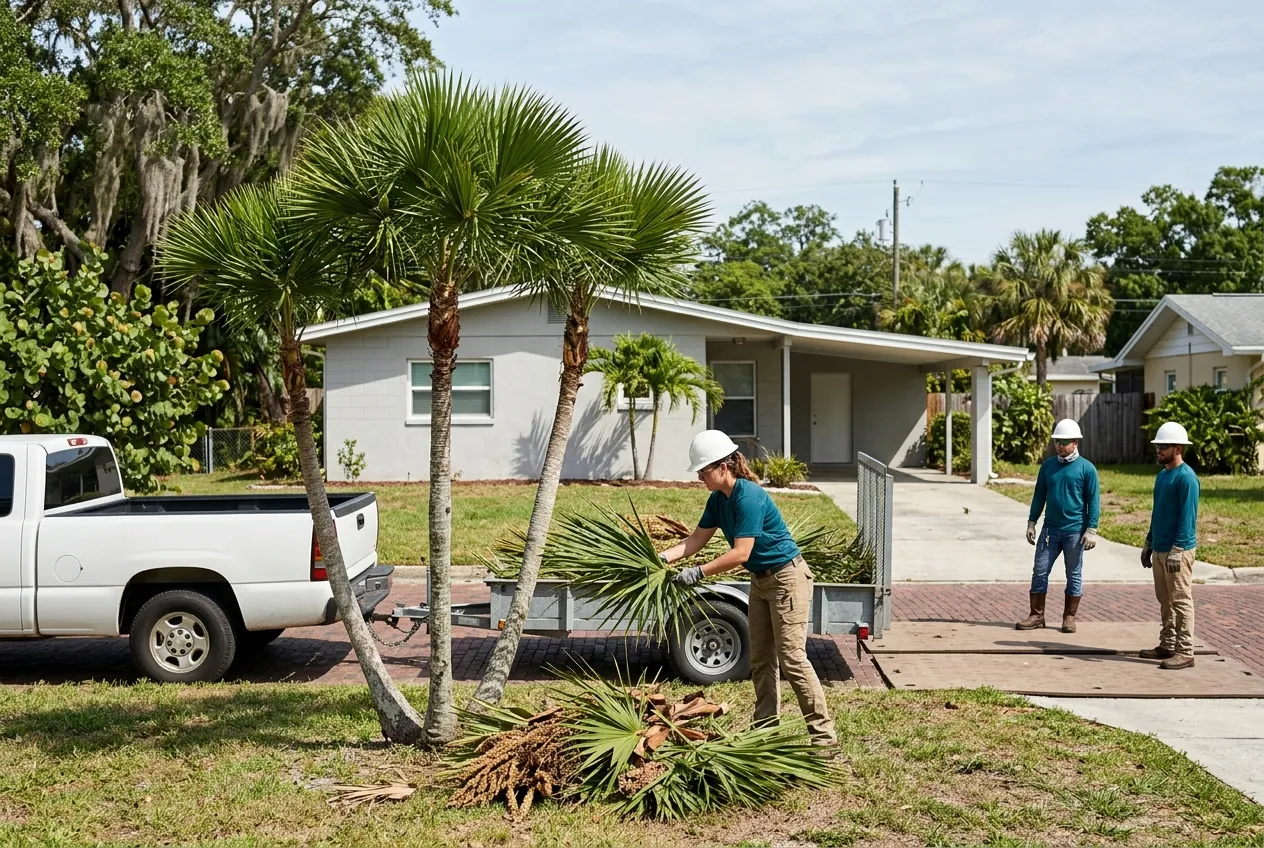
Pines need their own look. According to UF, a slash pine weakened by a storm becomes a target for Ips engraver beetles, frequently a season or so later, and once beetles have moved in the tree is lost. Dunedin's city arborist reported the same beetles in slash and longleaf pines after 2024. A pre-season visit is a good time to check any pine that has started to fade or brown, because a dead pine over a house is a removal job, not a trim. Laurel oaks that are reaching the end of their 50-to-70-year landscape life get the same honest assessment.
Hurricane Pruning Cost in Clearwater
Below are 2026 planning ranges for Clearwater-area properties, not quotes. We price each property in writing on a free visit, and the price includes hauling everything away, so nothing sits at the curb when the season opens.
| Job | Typical range | What moves the price |
|---|---|---|
| Crown thinning / hurricane pruning | $350–$1,300 per tree | tree size, deadwood, how much canopy (legal caps apply) |
| Oak trimming, large live oak canopy | $850–$1,800 per tree | spread, bucket vs climber, structural cuts |
| Tree trimming, medium (20–40 ft) | $300–$750 per tree | climb vs bucket truck, roof and line clearance, number of cuts |
| Palm trimming, 15–30 ft | $125–$325 per palm | frond count, pods and boots, ladder vs climb |
| Palm trimming, 30–60 ft | $225–$550 per palm | bucket-truck access, overhead lines, cleanup |
Spring calendars fill quickly, so a whole-property visit booked in January or February usually costs less than several small calls later. Limbs near the line to your house need a utility disconnect first; see tree trimming near power lines. And if a storm does put a tree on the house, emergency tree removal is the page you want.
Pre-season pruning is part of our tree trimming in Clearwater. Book your spring visit and we will set the date before the rush.
Hurricane Pruning Clearwater Questions
Book it for January through May. Finishing early gives trees a few months of fresh leaves before June 1, and Clearwater's guidance against trimming after a storm is named means waiting for a forecast leaves you no window at all.
No. It removes the dead, cracked and overweight wood most likely to fail and lowers wind load on the rest. It cannot protect a tree from salt-water flooding like Helene's surge, and a tree with root decay may still fail.
No. Pinellas Extension calls the practice harmful, and UF found crowns broke off hurricane-cut palms more often in the 2004 and 2005 storms. Removing dead fronds, pods and stalks is the useful part.
Within the legal cap for your city: 30% of a protected tree's foliage per year inside Clearwater, 25% in Dunedin and Safety Harbor. Most trees need far less. Over-thinning leaves weight at the limb tips and can count as an illegal removal.
Typical 2026 crown thinning and hurricane pruning runs $350–$1,300 per tree, with large live oaks at $850–$1,800 and palms priced by height. Haul-off is included, and a whole-property visit usually costs less per tree.
Not from a contractor job in Clearwater; contractors must haul their own debris, and ours is always included. Clearwater also wants trimming stopped after a storm gets its name, so loose brush is not lying around for the wind to throw.
More Clearwater Tree Services
Booked on the same visit.
Trimming
- Tree TrimmingRoof, pool-cage and driveway clearance, deadwood and crown thinning.
- Palm Tree TrimmingDead fronds, pods and fruit stalks off; green fronds stay.
- Oak Tree TrimmingLive, laurel and water oaks pruned within city canopy limits.
- Tree Trimming Near Power LinesService-drop clearance, scheduled around a Duke disconnect.
Removal
Get Ahead of Hurricane Season
Tree getting too close to the roof? Let’s look at it.
Trim in spring, sleep easier in September.
Mon–Sat 7am–6pm · storm calls taken