
Clearwater · Pinellas County, FL
Palm Tree Removal in Clearwater, FL
A palm grows from a single bud in its crown; lose the bud and you lose the palm. We diagnose what killed it, check the palm permit rule for your city, take it down without hurting the pool cage, roof or neighbors' palms, and grind the stump when the disease calls for it.
- Typical range
- $200–$1,800 per palm
- Clearwater trigger
- 10 ft of clear trunk
- Disease care
- Clean saw on every palm
- Included
- Fronds and trunk hauled off
Dead Palm Tree Removal in Clearwater, FL: Find the Cause First
Removing a palm is the easy part. Knowing why it died decides what happens to the stump, the palms beside it and whatever you plant next. Our crew trims far more palms than it removes, and that is how we spot most of these problems early. Here are the causes we see around Clearwater and north Pinellas, and what each one means.
Lethal bronzing
UF/IFAS has confirmed this disease in Pinellas County, and the cabbage palm, Florida's state tree, has been a known host since 2008. Planthopper insects spread it, not pruning tools. Nothing cures it, so UF/IFAS advises taking out any confirmed palm, and nearby healthy palms can be given preventive oxytetracycline injections to lower their risk.
Ganoderma butt rot
Every palm species can host this fungus. It is diagnosed by the hard, shelf-shaped conk that forms on the lower trunk. Nothing cures it. The palm needs to come down promptly, and the stump and roots need to be ground out rather than left to feed the fungus; see stump grinding for that step.
Fusarium wilt
The palms most often hit here are Canary Island dates, queens and Washingtonia, and nothing cures an infected palm. The fungus travels mainly on contaminated pruning saws, which is why we cut every palm with a new or disinfected blade, removal jobs included. Taking down a wilted palm with a dirty saw and then trimming the healthy one next to it is how the disease moves down a street.
Salt flooding
Helene's surge set a record at the Clearwater Beach gauge, 6.67 feet above the normal high-tide line, and yards on Island Estates and Clearwater Beach sat under it. Pinellas Extension notes that a stressed palm can need upward of six months before new fronds appear. A palm that stayed green in the center deserved that wait; a palm whose spear pulls out with a soft, rotten base did not survive. Our post on whether salt water kills trees covers the science.
Cold on coconuts
Coconut palms are at their edge in zone 10a. Cold injury can make the crown collapse about three months after the freeze, which surprises owners who thought the palm had come through fine.
Palm Tree Removal or a Wait-and-See Trim?
Palms hold up well in wind. In UF/IFAS research on Hurricane Charley, 88 percent of palms survived compared with 77 percent of broadleaf trees, so a palm that is failing is usually telling you about disease, salt or old injury rather than ordinary weather. A sabal that lost half its fronds in a blow generally grows them back; one with a soft, collapsed bud never does. We would rather save a palm than sell a removal, so this is the rule of thumb we use:
- Remove now: a confirmed lethal bronzing palm, any palm with a Ganoderma conk, a dead or rotted spear, a trunk cracked or leaning toward the house, or a crown that has collapsed.
- Wait and watch: brown lower fronds with a green spear after a storm or a salt flood. Those older fronds feed new growth, so we leave them and check back.
- Trim, don't remove: a healthy palm that just looks ragged. Dead fronds, pods and fruit stalks come off; green fronds stay. That is the work on our palm tree trimming page.
Palm Tree Removal Permits Around Clearwater
Palms trigger permits by trunk height, and each city draws the line in a different place. A dead or diseased palm is still a palm for permit purposes, so we check and file before we cut:
- City of Clearwater: any palm with a 10-foot clear and straight trunk, whatever the species.
- Dunedin: regulates cabbage palms only once they carry at least 6 feet of clear trunk and exempts other palms.
- Safety Harbor: sabal and Paurotis palms with at least 5 feet of clear trunk.
- Belleair and Largo: any palm with 4½ feet of clear trunk. Largo waives the fee and replacement for a dead or diseased tree, though the permit is still required.
- Unincorporated Pinellas: palms over 6 feet tall, except that homesteaded, owner-occupied single-family lots only need permits for trees over 24 inches DBH since January 23, 2026.
Inside Clearwater, three replacement palms count as one shade tree, while Canary Island date, edible date and Senegal date palms count one for one. For which palms are worth planting back, see the note at the bottom of this page.

Palm Tree Removal Near Pools, Roofs and Seawalls
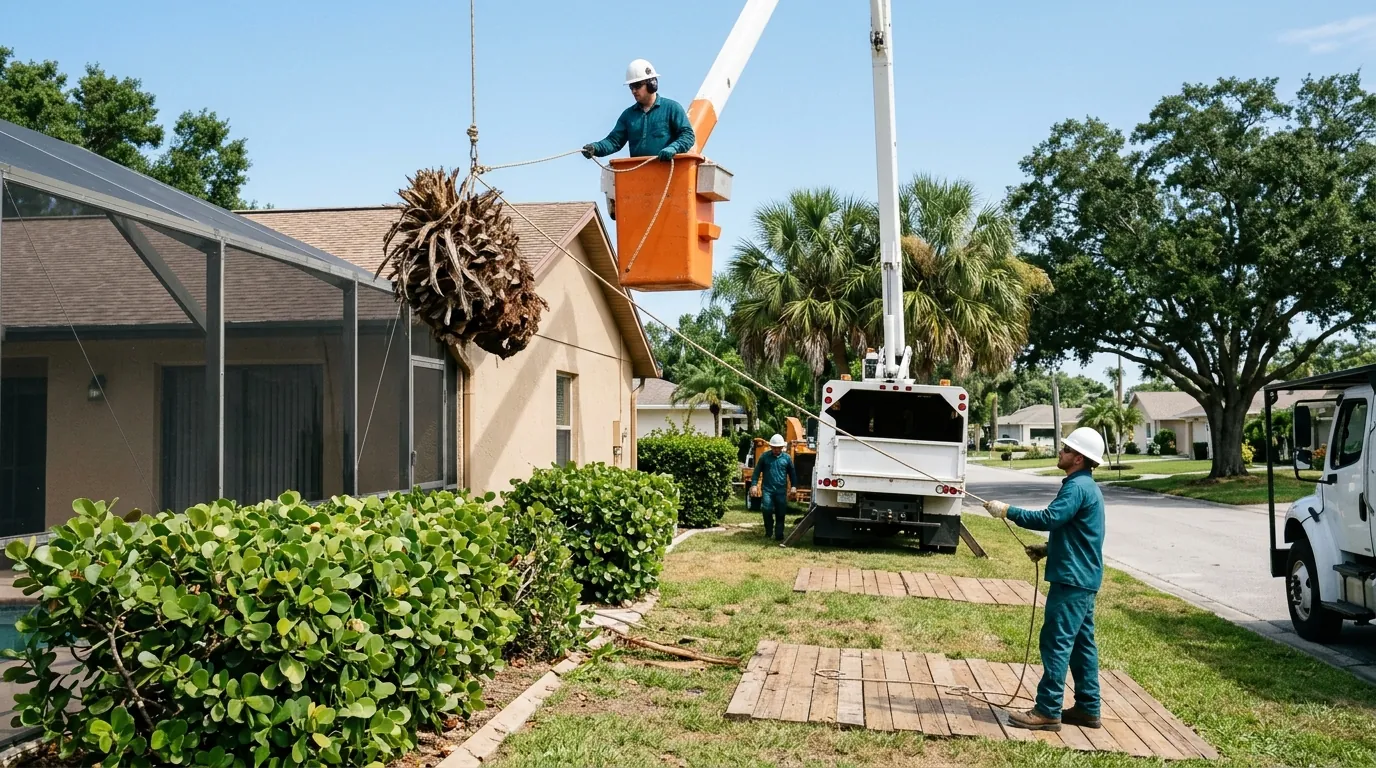
A short sabal in an open side yard can be dropped whole. Most palms around Clearwater stand next to something breakable, so the usual sequence is:
- Cut the fronds, seed stalks and any boots that could fall loose, and lower them clear of the pool cage or lanai.
- Remove the head, which is the heaviest part, on a rope or with a bucket truck.
- Take the trunk down in short rounds, lowered rather than dropped near pavers, docks and seawalls.
- Grind the stump if the palm had Ganoderma, or if you want the spot planted or sodded.
A tall Washingtonia can top 70 feet, and the crew sometimes needs a crane to clear a roof or a pool; we price that as a separate line. Climbing spikes are fine on a palm that is coming down, but never on one we are keeping. Palms near the line from the pole to the house wait until Duke Energy disconnects that line, which it does at no cost.
Palm Tree Removal Cost in Clearwater, FL
Planning figures only: these are typical Clearwater-area ranges for 2026. Every palm job is priced free and in writing, and that price covers fronds, trunk rounds and cleanup.
| Job | Typical range | What moves the price |
|---|---|---|
| Palm removal, under 30 ft | $200–$550 per palm | one-piece drop vs sectioning |
| Palm removal, 30–60 ft | $450–$1,100 per palm | bucket truck, roof or pool below |
| Palm removal, 60 ft+ | $900–$1,800 per palm | crane or climb, wires |
| Stump grinding, first stump | $150–$375 ($110 minimum visit) | diameter (about $3–$7 per inch), roots, access |
| Stump grinding, each additional stump same visit | $50–$125 per stump | diameter, spread across the yard |
| Crane add-on | +$1,000–$3,000 per job (40–55 ton crane); larger cranes quoted | crane size, set-up space, road permit |
Several palms on one visit cost less each than separate trips. Before removal day, move patio furniture, grills and potted plants away from the base, and point out any irrigation heads or landscape lights near the trunk. A palm head is heavy and full of water, and we want a clear landing zone for it. If you also have oaks or shade trees to remove, our main tree removal page lists those bands.
Want a second opinion before you decide? Our Clearwater tree service crew will look at the palm and tell you plainly whether it can be saved, and the hurricane cut guide explains why over-trimmed palms often end up on this page.
Palm Tree Removal Clearwater Questions
Typical 2026 Clearwater-area ranges are $200–$550 for palms under 30 feet, $450–$1,100 for 30–60 feet and $900–$1,800 for palms over 60 feet, with haul-off included. Stump grinding and crane work are separate lines. Every job gets a free written price.
Inside city limits, any palm with a 10-foot clear and straight trunk needs a removal permit, dead or alive. The neighboring cities and the county each set their own trunk height, so we check the address before we quote.
No. There is no cure, and UF/IFAS advises removing a confirmed palm. Healthy palms nearby can receive preventive oxytetracycline injections to lower their risk.
The fungus lives in the trunk and roots, so the stump and root mass should be removed rather than left in the ground. We also advise against planting a new palm in the same spot.
Not always. When the newest spear in the middle stays green and resists a tug, the palm may push new fronds within six months or so. If the spear pulls out easily with a rotten base, the bud has died and the palm should come down.
Yes, and we switch to a clean or disinfected saw for each palm so we don't carry Fusarium wilt from a diseased palm to a healthy one.
More Clearwater Tree Services
Booked on the same visit.
Trimming
- Tree TrimmingRoof, pool-cage and driveway clearance, deadwood and crown thinning.
- Palm Tree TrimmingDead fronds, pods and fruit stalks off; green fronds stay.
- Oak Tree TrimmingLive, laurel and water oaks pruned within city canopy limits.
- Hurricane PruningPre-season crown cleaning and thinning, booked before June.
- Tree Trimming Near Power LinesService-drop clearance, scheduled around a Duke disconnect.
Removal
Get the Dead Palm Down Safely
Tree getting too close to the roof? Let’s look at it.
Diagnosed, removed, stump handled, saws clean.
Mon–Sat 7am–6pm · storm calls taken